



Owlet Dream Sock® – Sleep After NICU: Why It Feels So Hard — and How Owlet ® Baby Monitors Can Help
|
Time to read 9 min
|
Time to read 9 min
Written by Dr Frankie Harrison - Clinical Psychologist, NICU parent, and Founder of Miracle Moon
Paid partnership: this guest blog was written in collaboration with Owlet.
I’m a Clinical Psychologist, and I’m also an ex-NICU (neonatal intensive care unit) parent. I work every day with parents whose babies needed neonatal or medical care, and who expected that once they were finally home, things would feel easier. For many families, that isn’t what happens, especially when it comes to anxiety and sleep.
Sleep advice after neonatal care often misses something important. The focus is on the safety of the baby. Place your baby on their back. Keep the sleep space clear. Follow the guidance and everything should feel manageable. But for parents leaving neonatal care, sleep rarely feels simple, because it is often layered with anxiety.
After a NICU stay, sleep is often one of the most emotionally loaded parts of bringing your baby home. What is meant to feel calming and restoring can instead feel anxiety-provoking, unsettling, or overwhelming. If that’s been your experience, you’re not alone, and there are very real psychological reasons why your baby’s sleep (and your own) can feel so tricky after NICU.
In neonatal care, parents become used to constant monitoring. The sounds of alarms monitoring oxygen and heart rates. Watching monitors constantly, trying to make sense of what is happening for their baby and bracing in case there is a change. In NICU there are professionals nearby who know what they’re looking at and what to do if something changes.
Over time, your nervous system learns that monitoring equals safety, visibility equals safety, data equals safety. That heightened alertness isn’t excessive in NICU. It’s necessary. Your body adapts to that environment because it has to.
The difficulty comes when you’re then at home. Suddenly everything feels incredibly quiet, especially at night. There are no monitors, no alarms, no staff just outside the door. You are expected to trust that your baby is safe, but often your nervous system is telling you something different.
Your environment has changed overnight, but your nervous system hasn’t had time to catch up. It takes time to really feel safe. So, if anxiety spikes at night, that isn’t you being irrational or doing something wrong. It’s your body responding to the sudden loss of external safety cues, and that makes sense.
After neonatal care, many parents are not just learning how to care for a baby at home. They are learning how to live without constant medical oversight for the first time since their baby was born.
One of the biggest psychological shifts after NICU is the move from externally held safety (teams, monitors, systems) to internally held safety, where responsibility can start to feel personal and absolute.
In hospital, care is shared. There are checks, handovers, and professionals holding risk alongside you. There are systems, alarms, and multiple people watching for changes. And whilst this feels hard, there can be comfort in this level of vigilance around your vulnerable baby.
At home, even if your baby is stable and safe, it can feel like that safety now rests entirely on you. Many parents I work with describe a deep sense of responsibility that goes beyond normal parenting responsibility. It can feel like if something happened, it would somehow be because you missed something, didn’t notice something quickly enough, or didn’t do enough. Which often links to the feelings that surround trauma from the neonatal experience.
Night-time often magnifies this. The silence can feel unsettling. Stillness can feel unsafe. It’s very common to find yourself second guessing every movement, every noise, or every quiet moment. Many parents end up watching their baby sleep, monitoring breathing, or staying half-awake listening for changes, because sleep itself can start to feel like something risky.
Over time, this can mean sleep becomes something you stay alert through, rather than something that restores you.
This is especially true if your baby has or had breathing difficulties, needed respiratory support, or experienced periods of instability. Your brain has learned that things can change quickly, so it stays on high alert, whether your baby is now medically stable, still has ongoing health needs, or lives somewhere in between.
That hypervigilance isn’t a personality trait or a lack of resilience. It’s a nervous system response shaped by what you and your baby have been through.
For some NICU parents, supportive tools can act as a bridge between hospital and home.
For many families, this includes smart baby monitors that offer more than watching their baby on a camera. These kinds of tools can provide physiological information and patterns over time, which some parents find helpful after an experience where monitoring was closely linked to support. When used thoughtfully, these tools, such as Owlet Dream Sock® can offer gentle reassurance and help parents feel more settled at home.
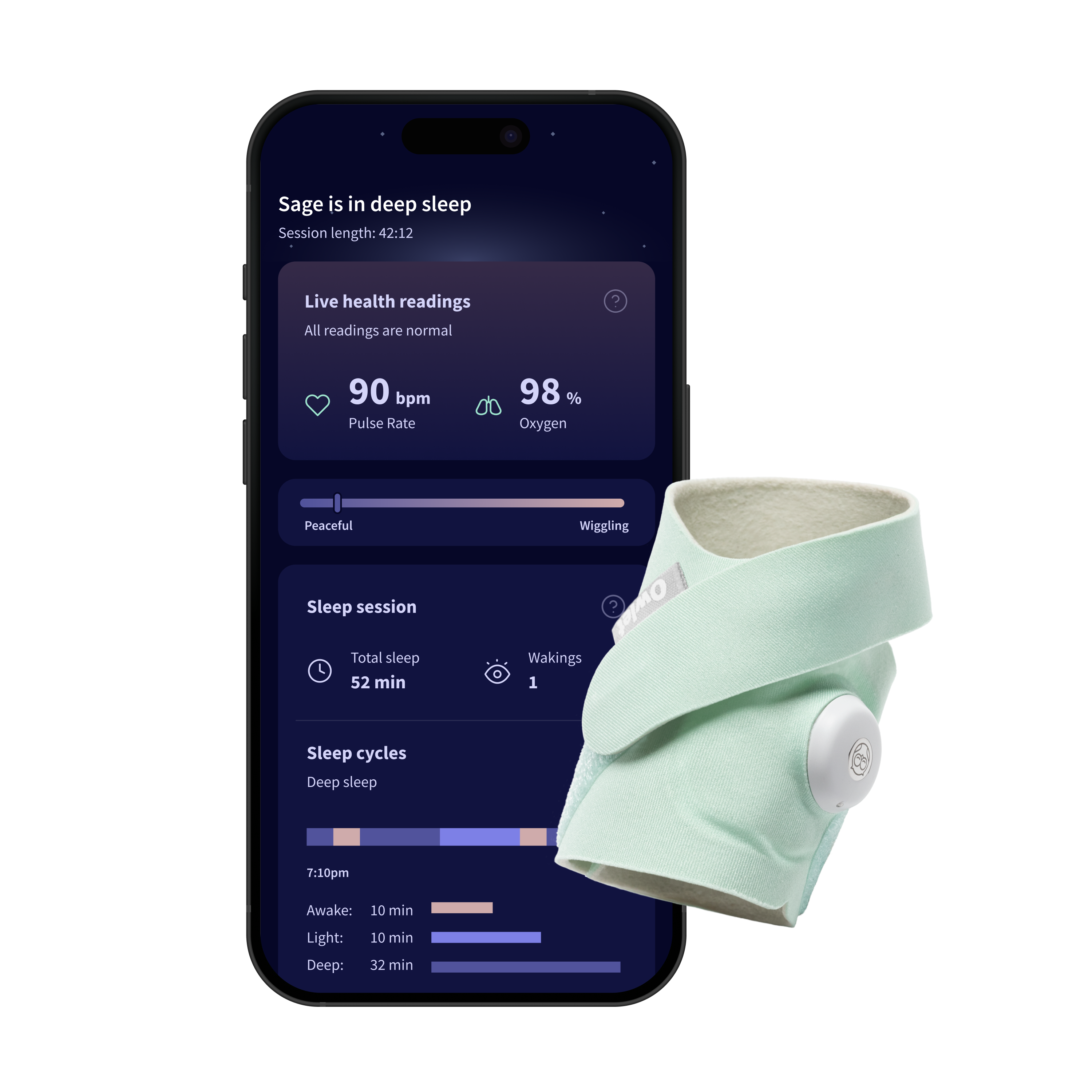
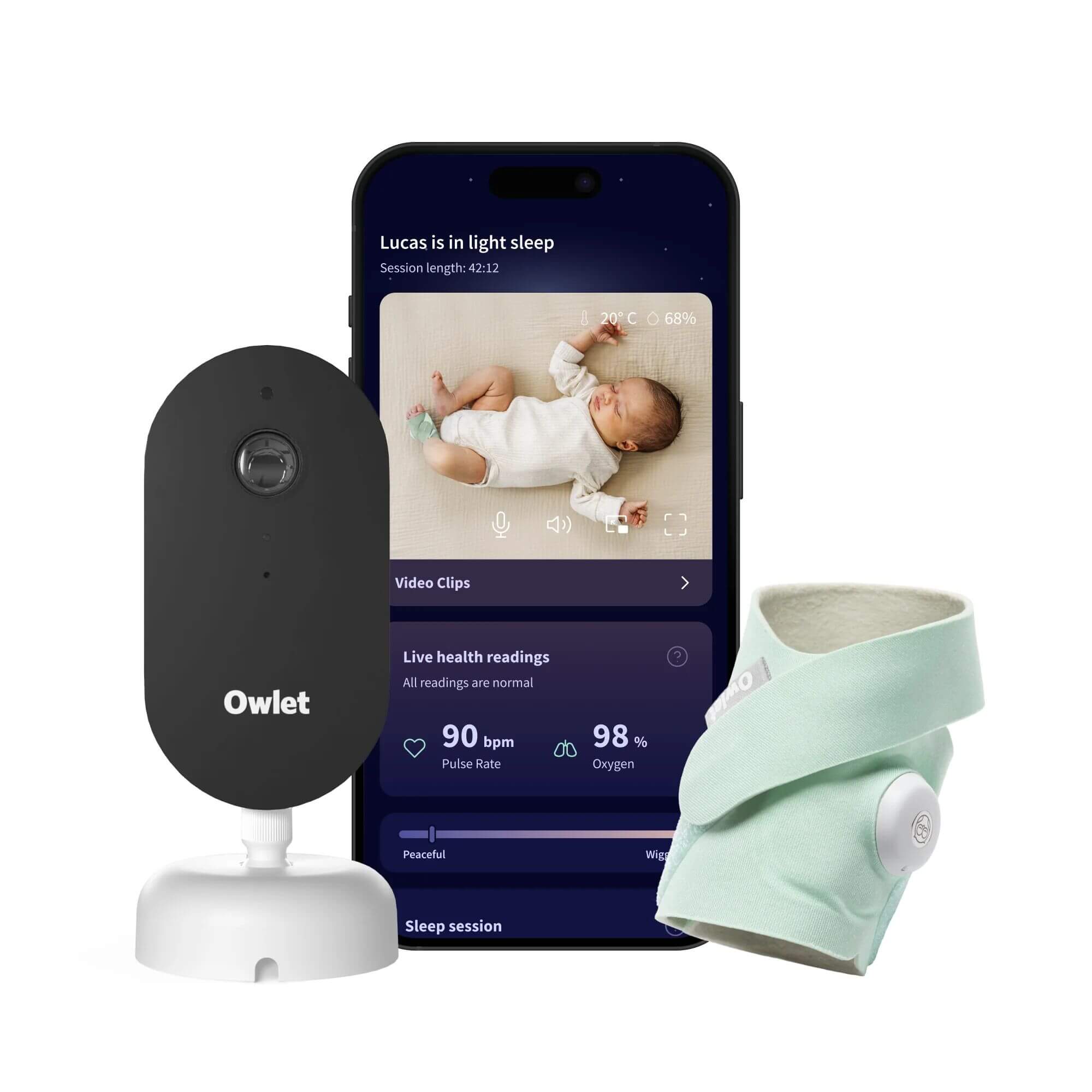
Dream Sock tracks a baby’s pulse rate and oxygen levels, wakings, and sleep trends, sharing this information via the Owlet® Dream App and base station. The Predictive Sleep Technology within Dream Sock also helps ease that uncertainty by providing personalised sleep guidance based on your baby’s own sleep patterns. For parents who have spent weeks or months watching monitors in NICU, having access to familiar types of information through a smart baby monitor at home can feel supportive during the transition home, particularly when anxiety is high at night.
What matters most is how these tools are used.
After neonatal care, many parents are adjusting to life without constant medical oversight.
In hospital, safety is shared across teams, technology, and systems designed to detect change quickly. At home, even when your baby is stable or improving, that sense of shared monitoring can disappear overnight.
For many parents, this creates a feeling of needing to stay “on watch”, even when part of them knows they don’t want to live that way forever.
For some families, tools like a smart baby monitor at home, such as Owlet Dream Sock can form part of that transition. Not as a replacement for clinical monitoring, and not as a way of removing all risk, but as a way of supporting the nervous system as it adjusts after living in an environment that was highly monitored.
For parents who find it helpful, an Owlet360™ membership can add an additional layer of context. Rather than focusing on single readings, Owlet360 provides summaries, trends, and patterns over time, including a personalised daily morning report, sleep position tracking, and comparisons with similar-aged babies. For some NICU parents, this broader view can help shift attention away from moment-by-moment worry and towards a more balanced understanding of how their baby is doing overall.
There is no fixed timeline for this adjustment. What matters is not how quickly you feel able to step away from reassurance, but whether you are slowly finding moments where you can rest, breathe, and feel even slightly less on alert than you did before.
Safety behaviours reduce fear short term but keep anxiety going long term. Safety supports help you function and regulate without increasing fear.
Like any reassurance, the helpfulness often depends on how and why it’s being used. Used in this way, supportive smart baby monitors like Owlet Dream Sock can help some parents feel reassured enough to rest, rather than relying on repeated checking through the night.
The goal is not to remove reassurance overnight. The goal is to help your nervous system learn that safety can exist without constant threat signals. This isn't about ignoring your instincts or symptoms- if you're worried about your baby, trust that and seek medical advice.
Alongside any practical support, helping your nervous system feel safer is often what makes the biggest difference at night.
Night-time is often when anxiety feels loudest. There are fewer distractions, less noise, fewer people around, and less external reassurance. For many NICU parents, this is also when memories, body sensations, and “what if” thoughts tend to show up more strongly. If your body feels more on edge at night, that makes sense. Your brain is trying to protect you and your baby in the only way it knows how.
Sometimes it can help to acknowledge that directly, with something like:
“Thanks brain, I know you’re trying to keep us safe.”
You’re not trying to get rid of the anxiety completely. You’re letting your brain know you’ve heard the warning, which can sometimes soften the intensity of the alarm response.
It can also help to work with your body, not just your thoughts. Progressive muscle relaxation, where you gently tense and then release different muscle groups, can help your body recognise that it is safe enough to let go, even if your mind still feels busy.
For parents using Dream Sock at night, it can be helpful to remember that you don’t need to be watching the app constantly. The base station provides a simple visual cue, a green light, showing that your baby’s pulse rate and oxygen level are within the preset ranges. For some parents, being able to glance at the base station rather than opening the app can support rest, rather than increasing monitoring.
It’s also important to be clear that Dream Sock is not a replacement for safer sleep practices. Parents should continue to follow safer sleep guidance and check on their baby as needed. The aim is to support confidence and rest, not to remove normal parental awareness or responsibility.
Small sensory anchors can help too. Feeling the weight of the duvet. Noticing the temperature of the room. Listening to the rhythm of your baby’s breathing. These aren’t about forcing calm. They’re about helping your brain orient to the present moment, rather than future threat.
What you do during the day matters too. Nervous systems don’t reset at night if they’ve been in constant threat mode all day. Small moments of regulation in daylight hours — fresh air, gentle movement, connection with someone safe, meeting your basic needs — can have a positive knock-on effect into the night.
It’s also very common to feel torn between wanting reassurance and feeling guilty for needing it. Many NICU parents feel like they should be coping better, or that needing extra reassurance means they’re not strong enough. If that resonates, you are in very good company. That push and pull is something I see in almost every NICU parent I work with.
None of this is about getting night-time “perfect”. It’s about giving your nervous system enough signals of safety that, over time, it can begin to stand down from constant watch mode.
If sleep feels complicated, emotional, or triggering after NICU, there is nothing wrong with you. Whether reassurance comes from safer sleep guidance, psychological support, or tools like Owlet Dream Sock in the background, you deserve support that meets you where you are.
About the Author
Dr Frankie Harrison is a Clinical Psychologist, NICU parent, and Founder of Miracle Moon and The NICU Space CIC, organisations dedicated to supporting parents through and after neonatal care. She specialises in working with parents who have experienced birth trauma, neonatal care, medical trauma, and ongoing anxiety related to their baby’s health and wellbeing.
Expertise
One-to-one therapy for parents (birth trauma, PTSD, NICU trauma, health anxiety, loss, identity changes)
EMDR therapy for trauma processing
Acceptance and Commitment Therapy (ACT) for perinatal mental health
Health anxiety and intrusive thoughts in parents
Supporting families through grief and loss
Pregnancy after NICU or birth trauma
Training professionals on trauma-informed neonatal care
Education & Qualifications
Doctorate in Clinical Psychology – University of Leicester (2017)
BSc in Psychology – University of Leeds
PG Cert in Low Intensity Interventions – University of Birmingham
EMDR Training – EMDR Institute
Acceptance and Commitment Therapy (ACT) Training
Compassion-Focused Therapy (CFT) Training
HCPC Registered Clinical Psychologist
Find out more @miraclemoonuk
www.miraclemoon.co.uk
This article shares general psychological perspectives and does not create a psychologist-client relationship. It is not a substitute for medical advice, diagnosis, or treatment. If you have concerns about your baby's health, contact a healthcare professional. Always follow NHS safer sleep guidance.
Dream Sock® is not a substitute for adult supervision or safe sleep practices. Do not rely solely on the notifications to determine if the baby is safe. Dream Sock® does not notify at every unexpected occurrence of an elevated or depressed Pulse Rate or a low Oxygen Saturation level. Dream Sock® notifications are intended to identify instances when the baby’s Pulse Rate and/or Oxygen Saturation level moves outside a preset range and are provided only when sufficient data are available for analysis. You should seek medical attention if the baby is not feeling well even if the reading is normal.


